FLORIDA BACKUP POWER ASSESSMENT
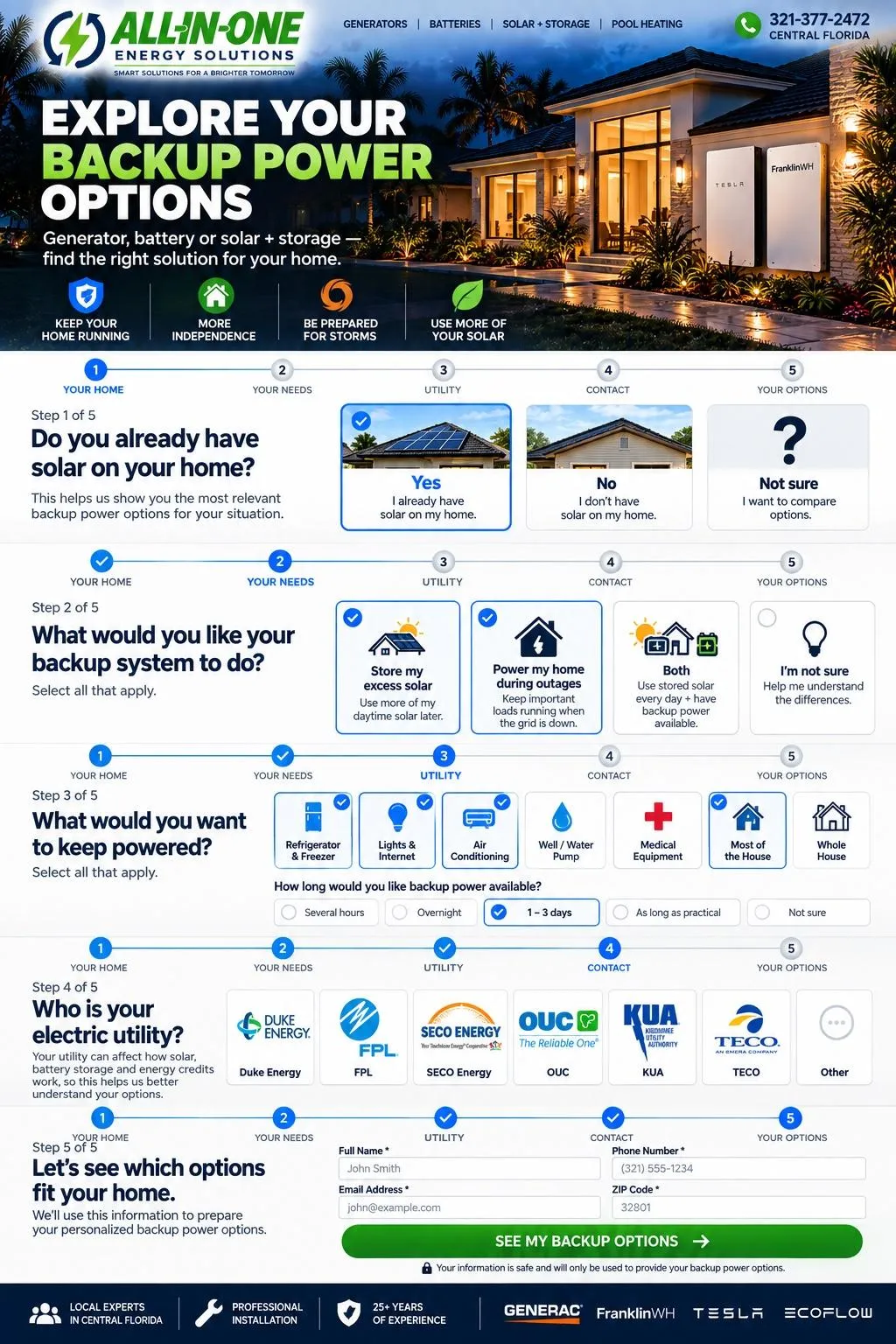
Explore Your Backup Power Options
Generator, battery or solar + storage — find the right solution for your home.
SIMPLE 3-STEP PROCESS
How Our Comparison Works
We consider your home's key electrical needs alongside typical hurricane conditions to help outline suitable backup options.
STEP 01
Share Your Needs
Provide details about your critical appliances, cooling priorities, and typical outage durations in a brief 2-minute assessment.
STEP 02
Compare Tailored Options
Examine side-by-side comparisons of battery storage and standby generators, focusing on factors like noise, fuel needs, and approximate lifecycle costs.
STEP 03
Receive a Personalized Backup Plan
Get a clear equipment outline with estimated sizing and installation costs plus no-obligation quotes from local providers.
Free · No Obligation · Local Expertise
CONSIDERATIONS FOR YOUR HOME
Battery vs. Generator
Review key operational, fuel, and maintenance factors to help determine which backup system may suit your home's unique needs.
Home Battery Storage
Provides electrical storage that activates during outages and does not depend on fuel deliveries. Performance varies based on your home's setup.
- Generally quiet with no exhaust emissions
- Can integrate with rooftop solar for recharging
- Switches power quickly, reducing appliance interruptions
- Requires minimal routine maintenance related to fuel storage
Traditional Generator
Mechanical power source that uses fuel such as natural gas, propane, or diesel. Suitability depends on available fuel infrastructure.
- Needs a reliable fuel supply or on-site tanks
- Produces audible engine noise and requires exhaust venting
- Regular oil and filter maintenance needed, plus periodic testing runs
- High surge power suited for heavy whole-home loads
RETROFIT SOLAR STORAGE
Already Have Solar?
Many grid-tied solar systems automatically shut down during blackouts. We offer battery storage solutions designed to integrate with your existing panels, helping to maintain power during outages depending on your home's setup and equipment.
Designed to work with a wide range of solar systems
INFORMED DECISIONS FOR YOUR HOME
Backup Power Questions
Find cautious, practical guidance on system sizing, cooling loads, solar integration, and what to expect during your home-specific assessment.
Can a backup battery or generator run my central air conditioning during an outage?
In many cases, backup systems can support central A/C compressor loads, especially if equipped with soft-start technology. However, performance depends on your home’s exact cooling requirements, so an individualized load evaluation is recommended to confirm suitability.
How do I know what size backup system my home actually needs?
Backup system sizing varies based on your priorities, whether essential circuits only or full home coverage. A detailed assessment considering your utility data and peak loads helps tailor recommendations to avoid oversizing or undersizing.
Do I need existing solar panels to install a home backup battery?
Backup batteries can operate independently of solar panels, recharging from the grid during off-peak periods. Integration with solar is an option but not a requirement. Specific protocols to charge before outages vary by system and location.
What happens immediately after I submit my comparison request?
A local energy professional will review your information and provide a tailored comparison of backup options based on your home’s characteristics, followed by a consultation to discuss your personalized report. Response times typically occur within one business day.
What maintenance is required to keep the system operational year-round?
Battery systems generally require minimal maintenance, including software updates and health monitoring. Standby generators typically need routine oil and filter changes plus periodic self-tests. Remote monitoring helps ensure system readiness before severe weather seasons.
All-In-One Energy Solutions LLC
Orlando, Florida • Serving Central & Greater Florida


Recommendations may vary based on your home's specific needs and conditions.
© 2026 All-In-One Energy Solutions LLC. All rights reserved.